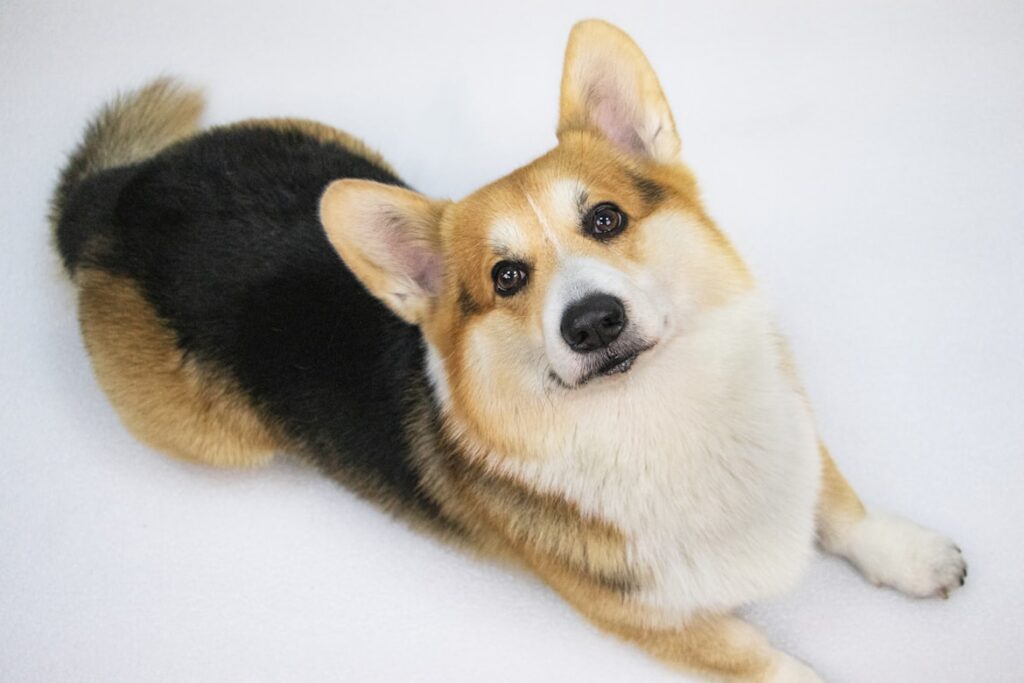
Not every policy pays out for a slipped disc, so finding pet insurance that covers IVDD in Australia matters more for these breeds than almost any other cover decision. If you own a chondrodystrophic breed (a Dachshund, a Pekingese, a Frenchie, a Corgi, a Basset Hound), intervertebral disc disease is the single largest financial risk you should plan for. The peak Australian authority on the condition, Dachshund IVDD Support Australia (DISA), puts the lifetime risk at 1 in 4 Dachshunds. A single episode in Australia costs $8,000 to $15,000 by the time you add imaging, surgery, hospitalisation, and rehabilitation. Some dogs have more than one episode.
Most articles on this topic are written by insurers about their own policies. That is a problem if you actually want to know which Australian insurer will pay out when your dog can’t use its back legs at 11pm on a Sunday.
I’ve insured my own Shih Tzu for 14 years, paid Pacific International premiums every month, read every PDS Pet Circle and PetsOnMe have published, and never once been paid by either company to say what I’m about to say. Here’s what you need to know about IVDD cover in Australia, which two policies are worth your money, and which clauses to search for in any PDS before you sign.
Does pet insurance cover IVDD in Australia?
Is IVDD covered by pet insurance? Yes, on most comprehensive accident and illness policies in Australia, provided the condition was not pre-existing when you took out the policy. Accident-only policies typically do not cover it.
Three caveats sit on top of that yes, and every IVDD-aware owner needs to understand them.
Pre-existing rule. If your dog showed signs or symptoms of back pain, weakness, or neurological issues before the policy started, IVDD will be permanently excluded. Not just the first episode. All future episodes too. A vet note from 18 months ago saying “occasional back stiffness” can be enough.
Waiting periods. Standard 30-day illness waiting periods apply to most Australian policies. If symptoms appear during the waiting period, IVDD counts as pre-existing from then on. Take the policy out now, not after the first wobble.
Sub-limits. A small number of policies cap IVDD or spinal conditions at a per-condition limit, sometimes as low as $3,000 per year. For a breed with a 1 in 4 lifetime risk and a $10,000 plus episode cost, that cap is close to useless. Always check whether the annual limit applies across all conditions, or whether it splits into sub-limits per condition.
The short version. Comprehensive cover, no sub-limits, taken out before any symptoms appear. Anything else and you’re either gambling or paying for cover you can’t claim against.
IVDD symptoms, and what to do in the first hour
Most people landing on this page are not shopping for a policy. They are watching their dog do something that frightens them and trying to work out how bad it is. So before any of the insurance detail, here is the clinical picture, sourced from Australian specialists rather than from me. I insure dogs. I don’t treat them.
The Small Animal Specialist Hospital lists these as the signs to watch for:
- Reluctance to jump, run, or climb stairs
- Crying out when touched around the back or neck
- A change in posture, an arched back or a stiff neck
- Dragging legs, or knuckling of the paws
- Weakness or wobbliness when walking
- Loss of bladder or bowel control
- Paralysis
Brisbane Veterinary Specialist Centre adds that the mild signs are vague and often read as a behaviour change rather than an injury: a dog that suddenly will not jump on the couch, sudden cries of pain, a hunched back, a tense belly, muscle tremors.
If you are seeing any of it, SASH’s advice is to confine the dog immediately to a crate or pen, support both the front and hindquarters when lifting so the spine cannot bend or twist, swap the collar for a harness if the neck seems sore, and get to a vet urgently.
How much the delay matters is the part worth sitting with. A dog that is completely paralysed but can still feel pain in its feet has a better than 90% chance of walking again after surgery. Once deep pain sensation is lost, BVSC puts the odds of returning to function at roughly 60%. That gap is why IVDD is treated as an emergency rather than a wait and see.
Testing for deep pain is a vet’s job, not yours. Prodding at your dog’s feet to check will tell you nothing reliable and may hurt them.
Can you treat IVDD at home?
Partly, and only after a vet has seen the dog.
Conservative management, the non-surgical path, is a legitimate treatment and most of it does happen at home. SASH describes it as best suited to dogs with mild to moderate pain, or mild neurological signs where the dog can still walk. It means strict confinement for at least six weeks, and BVSC puts the range at six to eight, alongside anti-inflammatory and pain medication. Not short lead walks. Not the run of the house. Confinement, with the dog carried to and from the toilet.
Two things about it that owners tend to find out late.
The first is that it fails sometimes, and signs that worsen during conservative management usually mean surgery would have produced the better result. The dog needs watching, not just resting.
The second is recurrence. SASH puts it at up to around 40% of conservatively treated dogs, and notes recurrence is more likely where the activity restriction was not followed strictly. Six weeks of a bored, apparently recovered Dachshund in a pen is genuinely hard, and the temptation to let them out early is exactly what that number is measuring.
Here is where it stops being a veterinary problem and becomes an insurance one. That first episode goes into your dog’s clinical record permanently. If you were uninsured when it happened, every policy you apply for afterwards treats the spine as pre-existing, and a 40% recurrence rate on a condition you can no longer insure against is a bad position to be in. If you were already insured, the question shifts to whether your insurer excludes the condition at renewal, which is the second of the DISA rules below.
The cheapest version of IVDD is the one where the policy was already in place.
What IVDD surgery and treatment actually cost in Australia
The numbers vary by case, but here is the breakdown from Australian veterinary specialist pricing and the PetSure 2020 claims dataset.
| Component | Australian price range |
|---|---|
| Emergency presentation and diagnostic exam | $200–$500 |
| MRI or CT imaging | $1,500–$3,000 |
| Spinal surgery | $5,000–$10,000 |
| Hospitalisation, 3 to 7 days | $1,500–$3,000 |
| Post-operative rehabilitation (hydrotherapy + physio) | $1,500–$3,000 |
| Full episode, presentation to recovery | $8,000–$15,000 |
DISA quotes a higher upper bound of $15,000 to $25,000 when alternative therapies, severe cases, and state-by-state pricing variation are included. Both numbers are accurate, they just count different things.
The implication for your policy choice is direct. A $10,000 annual limit can be exhausted by one IVDD episode before rehabilitation starts. A $20,000 limit gives you genuine room. A $30,000 limit is the right tier for a breed with a 1 in 4 lifetime risk.
PetSure’s 2020 claims data showed an average IVDD claim of $3,480 and a single maximum claim of $31,000. The average pulls down because it includes mild cases managed with rest and medication. The cases that need surgery sit much higher.
Breeds where IVDD coverage is non-negotiable
IVDD shows up most in dogs with chondrodystrophic body shape, the short-leg long-back trait that comes with abnormal cartilage development. The intervertebral discs in these dogs calcify earlier and rupture more easily than in regular-bodied dogs.
| Breed | IVDD risk versus the average dog |
|---|---|
| Miniature Dachshund | 4.8× |
| Standard Dachshund | 4.5× |
| Pekingese | High, chondrodystrophic |
| French Bulldog | Elevated |
| Basset Hound | Elevated |
| Welsh Corgi (Pembroke and Cardigan) | Elevated |
| Beagle | Moderately elevated |
| Shih Tzu | Moderately elevated |
| Cocker Spaniel | Moderately elevated, often the gradual Type II form |
If you own one of these breeds, IVDD cover is not optional. If your dog is a chondrodystrophic mix (a Cavoodle with strong Cavalier bone, a Doxiepoo, a Frenchton), assume the risk applies until your vet tells you otherwise.
There are two forms. Type I is the sudden disc rupture more common in small chondrodystrophic breeds. Type II is the gradual degeneration more common in larger or older dogs. For insurance purposes, comprehensive policies cover both under the same IVDD category.
Two Australian insurers I recommend for IVDD cover
There are more pet insurance brands than there are underwriters in Australia, and most of the brands you see advertised are underwritten by either PetSure or Pacific International Insurance. Pet Circle Insurance and PetsOnMe are both Pacific International products. I recommend these two because I’ve read their PDS documents in full, the policy structures are clean, and the coverage actually pays out on IVDD when you do the paperwork properly.
I earn a small commission if you purchase through these links, at no extra cost to you.
Pet Circle Insurance
What it does well for a Dachshund or other at-risk breed:
- One policy structure, no sub-limits on IVDD or any other condition
- Annual excess only, paid once per policy year regardless of how many claims
- Annual limit options up to $30,000, the right tier for a 1 in 4 risk breed
- Pacific International Insurance underwritten
- Canstar Outstanding Value 2024 and 2025 winner
- 2 months free at time of writing with code
PCI2FREE
What to watch:
- Maximum entry age is under 9 years. If your dog is already older than that and not previously insured, this policy is closed to you.
- Premiums climb steeply between age 4 and age 7. Quoting a desexed male Standard Dachshund in May 2026, the monthly premium rose from $70.20 at age 4 to $126.99 at age 7. That is an 81% increase across three years of cover. Insure early or pay the catch-up rate for the rest of the policy’s life.
Get a quote from Pet Circle Insurance →
PetsOnMe
PetsOnMe sells three policy tiers. For an IVDD-prone breed you only need to consider two of them.
- Accidental Plan: does not cover IVDD. Skip this tier entirely for at-risk breeds.
- Classic: $10,000 annual limit. Covers IVDD if not pre-existing.
- Deluxe: $20,000 annual limit. The IVDD-suitable tier for a Dachshund or Frenchie.
What it does well:
- Pacific International Insurance underwritten
- Next business day claim payment
- Maximum entry age 9 years for Classic and Deluxe
- 2 months free for pets under 1 year, 1 month free for older pets
What to watch:
- The Classic tier’s $10,000 limit can be exhausted by one moderate IVDD episode before rehabilitation. Pick Deluxe if you want real cover.
- Over-9 dogs not previously insured cannot get Classic or Deluxe. The Accident Plan is available but does not cover IVDD, which defeats the purpose.
I earn a small commission if you purchase through these links, at no extra cost to you.
Check PetsOnMe cover for your dog →
If your dog is already older or already diagnosed
RSPCA’s PetShield plan accepts new dogs up to their 16th birthday. I’m not affiliated with them and earn nothing if you sign up there. It’s one of the few plans that still take a dog outside the entry-age windows above, and I list the others in my guide to pet insurance for older dogs. Pre-existing IVDD remains excluded regardless of which insurer you choose, so a dog already diagnosed with IVDD cannot be insured for that condition by anyone.
The DISA 4 rules every IVDD owner should follow
Dachshund IVDD Support Australia is the peak non-profit body for the condition in this country. Their published guidance on insurance is some of the most clear-eyed material on the topic and it gets quoted less often than it should. Here are the four rules they publish, with what each one means in practice.
- Always read the exclusions. If it’s not excluded, it’s covered. Most owners read the inclusions section, see “spinal conditions” listed, and stop reading. The exclusions are where the money is. Search for any clause that limits, caps, or excludes IVDD specifically.
- Check with the insurer if a claim is made. Will the issue be excluded on renewal, or will the policy be declined? This matters more than most owners realise. Some insurers cover the first claim, then exclude that specific condition on renewal. Others can decline the policy entirely if the claim is large.
- Once a policy has been declined, it is very difficult to get insurance with another insurer. This is the rule almost nobody talks about. Insurers ask declared questions about previous insurance history. A declined policy in your dog’s history makes the next application much harder.
- Always read the PDS. Generic statement, specific application. Open the PDS PDF, use Ctrl+F, search for “intervertebral”, “spinal”, “hereditary”, “pre-existing”, “bilateral”. Read those sections before you sign up.
Source: DISA, Insurance & Finance guidance.
Exclusion clauses that catch IVDD owners out
The PDS-reading routine above is the difference between an IVDD claim that pays and one that doesn’t. Three clauses are worth searching for specifically.
Bilateral conditions clause. If your dog has an IVDD episode at one disc location, then a recurrence at a different disc location 18 months later, is that one claim or two? Most policies treat IVDD as a single condition even across multiple disc locations, but the sub-limit and bilateral wording determines whether the second episode is covered at all or counts against a per-condition limit. Check the wording for “same body system” or “bilateral conditions” clauses.
Hereditary and congenital conditions clause. IVDD is hereditary in chondrodystrophic breeds. Comprehensive policies cover hereditary conditions as standard, but accident-only and basic plans usually exclude them. The clause to look for is one that says hereditary or congenital conditions are excluded unless the policy explicitly states otherwise. If you can’t find a positive inclusion of hereditary conditions, assume they’re not covered.
Symptom-onset clause. This is the one that catches most owners out. Insurers exclude conditions where signs or symptoms appeared before the policy started, or during the waiting period. Signs and symptoms are a lower bar than diagnosis. A vet note from six months ago that mentions occasional back stiffness, a hunched posture, or reluctance to jump can be enough to exclude IVDD for the life of the policy.
The fix is uncomfortable but effective. Get your dog insured before you ever take them to the vet for anything that could be construed as a back, spine, or neurological symptom. Once it’s in the file, it’s in the underwriter’s hands.
FAQs
Does pet insurance cover IVDD surgery?
Yes. Most comprehensive accident and illness policies in Australia cover IVDD surgery, provided the condition was not pre-existing when you took out the policy. Comprehensive means a policy that covers both accidents and illnesses, with hereditary conditions included, and no sub-limits on spinal conditions. Accident-only and basic plans typically do not cover IVDD surgery because they exclude hereditary and degenerative conditions.
Can I get pet insurance if my dog has already been diagnosed with IVDD?
Not for IVDD treatment itself. Once IVDD is in the vet record, every Australian insurer treats it as pre-existing and excludes it permanently. You can still insure the dog for other conditions, and for accidents unrelated to the spine. RSPCA Pet Insurance has the most generous acceptance window for older or previously uninsured dogs, accepting new policies up to age 16.
What is the waiting period for IVDD claims?
Standard 30-day illness waiting periods apply to most Australian comprehensive policies, and that 30-day window covers IVDD. Some insurers apply longer waiting periods to cruciate ligament conditions (6 months is common), but IVDD usually sits under the standard illness waiting period.
Will my insurer drop me after an IVDD claim?
No. Comprehensive policies are obligated under the PDS to offer renewal year over year, and IVDD treatment does not invalidate that. What does change is the premium. After a large IVDD claim, expect the next renewal premium to climb materially. The cover stays, but the cost goes up.
Does insurance cover post-surgery rehabilitation?
Comprehensive policies usually include hydrotherapy, physiotherapy, and prescription rehabilitation when ordered by a vet as part of an IVDD treatment plan. Rehabilitation costs count against your annual limit, which is why the $20,000 or $30,000 tier matters. The full episode, including 6 to 8 weeks of post-op rehab, can easily run $3,000 of the total bill.
What is the difference between Type I and Type II IVDD for insurance purposes?
Insurance treats them the same. Both are covered as IVDD under comprehensive policies, both are excluded if pre-existing, both fall under the same sub-limit if your policy has one. The medical distinction matters to your vet (Type I is acute disc rupture, Type II is gradual degeneration) but not to your insurer.
What are the first signs of IVDD in a dog?
Reluctance to jump or climb stairs, crying out when touched around the back or neck, an arched back or a stiff neck, dragging legs or knuckling of the paws, wobbliness when walking, and in worse cases loss of bladder control or paralysis. The early signs are easy to mistake for a mood change. A Dachshund that suddenly will not jump onto the couch is worth a vet call rather than a wait and see.
Can IVDD be treated at home?
Only under veterinary direction. Conservative management is the non-surgical path and most of it does happen at home, but it means strict confinement for six to eight weeks with prescribed pain relief, not simply taking it easy. SASH reports recurrence in up to around 40% of conservatively treated dogs, and it is more likely where the confinement was not followed properly. Starting it yourself, without a diagnosis, risks permanent damage to the spinal cord.
How much does IVDD surgery cost in Australia?
Spinal surgery on its own runs $5,000 to $10,000. Once you add the emergency presentation, MRI or CT imaging, several days of hospitalisation and post-operative rehab, a full episode lands between $8,000 and $15,000. DISA quotes $15,000 to $25,000 where a case is complicated.
Where to go from here
If you own a Dachshund, the dedicated Dachshund pet insurance guide has breed-specific premium quotes for Pet Circle and PetsOnMe at age 4 and age 7. For the broader question of whether pet insurance is worth it for any dog, the anchor article on 14 years of insuring my Shih Tzu walks through the real numbers from puppy premium to senior premium. If your dog is older or already has health history, the pre-existing conditions guide and the older dogs guide cover what’s still available to you.
I earn a small commission if you purchase through these links, at no extra cost to you.